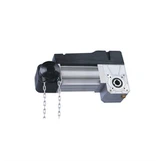
As a supplier of sectional door motors, I've witnessed firsthand the importance of every component in ensuring the smooth and safe operation of these systems. One critical part that often goes unnoticed until it malfunctions is the safety sensor. In this blog, I'll delve into what happens when the safety sensor on a sectional door motor fails and why immediate action is crucial.
How Safety Sensors Work in Sectional Door Motors
Before we explore the consequences of a failed safety sensor, let's understand how these sensors function. Most modern sectional door motors come equipped with safety sensors that are typically installed near the bottom of the door on both sides. These sensors work in pairs, emitting an infrared beam across the door opening. When the beam is unbroken, the door can operate normally. However, if an object or person interrupts the beam while the door is closing, the sensor sends a signal to the motor to stop and reverse the door's movement, preventing potential accidents and injuries.
Potential Consequences of a Failed Safety Sensor
- Safety Hazards: The most significant risk of a failed safety sensor is the increased potential for accidents. Without a functioning sensor, the door may continue to close even if there's an obstacle in its path. This could lead to serious injuries, such as pinched fingers, crushed limbs, or even fatalities. For instance, in a commercial setting where forklifts and pedestrians are constantly moving around, a malfunctioning sensor could pose a severe threat to anyone passing through the door opening.
- Property Damage: Apart from endangering human lives, a faulty safety sensor can also cause damage to property. If the door closes on a vehicle, equipment, or other objects, it can result in significant repairs or replacements. In a warehouse environment, this could disrupt operations and lead to costly downtime.
- Non - Compliance with Safety Regulations: Many regions have strict safety regulations regarding the installation and maintenance of sectional doors. A failed safety sensor means that the door system is no longer compliant with these standards. This can result in fines and legal issues for the facility owner. Additionally, non - compliant doors may not pass regular safety inspections, which could further impact business operations.
- Premature Wear and Tear on the Door Motor: When a safety sensor fails, the door may be forced to operate under abnormal conditions. For example, if the door closes on an object, the motor has to work harder to try and complete the closing process. This extra strain can cause premature wear and tear on the motor and other components of the door system, leading to more frequent breakdowns and shorter equipment lifespan.
Common Causes of Safety Sensor Failure
- Physical Damage: Safety sensors are often located in vulnerable positions near the floor, making them susceptible to damage from accidental impacts. For example, a forklift or pallet being moved through the door may hit the sensor, knocking it out of alignment or damaging its internal components.
- Dirt and Debris: Over time, dirt, dust, and debris can accumulate on the sensor lenses, blocking the infrared beam. This interference can cause false signals or prevent the sensor from detecting obstacles properly. In industrial environments, where there is a lot of dust and debris, this is a common problem.
- Electrical Issues: Faulty wiring, loose connections, or power surges can also cause safety sensor failure. Electrical problems can disrupt the signal transmission between the sensor and the motor, rendering the sensor ineffective.
- Environmental Factors: Extreme temperatures, humidity, and exposure to sunlight can also affect the performance of safety sensors. For example, in hot and humid climates, moisture can cause corrosion inside the sensor, leading to malfunctions.
How to Detect a Failed Safety Sensor
- Door does not reverse: If the door fails to stop and reverse when an object is placed in its path during closing, this is a clear sign that the safety sensor may be malfunctioning.
- Sensor indicator lights: Most safety sensors have indicator lights that show their status. If the lights are not illuminated or are flashing erratically, it could indicate a problem with the sensor.
- Repetitive error messages: Some door motor control panels display error messages when there is an issue with the safety sensor. If you notice such messages repeatedly, it's time to investigate the sensor.
What to Do When a Safety Sensor Fails
- Emergency Shutdown: As soon as you suspect a safety sensor failure, immediately shut down the door motor to prevent any potential accidents. This will ensure the safety of everyone in the vicinity of the door.
- Inspect the Sensor: Check the sensor for any visible signs of damage, such as cracks, dents, or loose wiring. Clean the sensor lenses with a soft, dry cloth to remove any dirt or debris that may be blocking the beam.
- Realign the Sensors: If the sensors are misaligned, the infrared beam may not be properly detected. Use a built - in alignment tool or follow the manufacturer's instructions to realign the sensors so that the indicator lights on both sensors are illuminated steadily.
- Seek Professional Help: If you're unable to identify or fix the problem yourself, it's advisable to seek the assistance of a professional technician. At our company, we offer expert repair and maintenance services for sectional door motors. Our technicians are highly trained and experienced in diagnosing and fixing safety sensor issues.
Our Product Offerings
As a leading supplier of sectional door motors, we offer a wide range of high - quality products to meet different needs. Our 380V Industrial Door Motor 380V is designed for heavy - duty industrial applications, providing powerful and reliable performance. For smaller commercial or residential use, our 220V Industrial Sectional Door Motor offers a more energy - efficient and cost - effective solution.


Contact Us for Purchase and Consultation
If you're in the market for a new sectional door motor or need assistance with the maintenance and repair of your existing system, don't hesitate to contact us. Our team of experts is ready to provide you with the best advice and support to ensure the safety and efficiency of your door operations. Whether you have questions about product specifications, installation requirements, or after - sales service, we're here to help. Reach out to us to start a discussion about your sectional door motor needs.
References
- National Fire Protection Association (NFPA) 88B: Standard for Parking Structures
- Occupational Safety and Health Administration (OSHA) regulations regarding industrial door safety
- Manufacturer's manuals for sectional door motors and safety sensors