

Hey there! As a remote control supplier, I get asked a ton about the difference between regular and learning remote controls. It's a pretty common question, and I'm here to break it down for you in a way that's easy to understand.
Let's start with regular remote controls. These are the ones you're probably most familiar with. They're the kind that come with your TV, your DVD player, or your old-school fan. Regular remote controls are pre - programmed to work with specific devices. When you buy a TV, for example, the remote that comes with it is designed to send a set of unique signals to that particular TV model. These signals tell the TV what to do, like turn on, change channels, or adjust the volume.
The main advantage of regular remote controls is their simplicity. They're straightforward to use. You pick it up, press a button, and the device responds. There's no need to go through any complicated setup processes. But that simplicity also comes with a downside. If you have multiple devices from different manufacturers, you'll end up with a bunch of remotes clutched in your hand. It can be a real hassle trying to find the right one for the device you want to control at the moment.
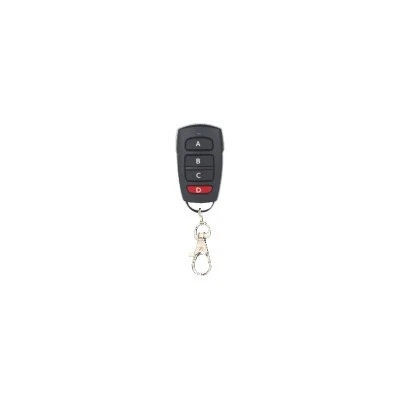

Now, let's switch gears and talk about learning remote controls. These are the cool kids on the block. A learning remote control has the ability to learn the signals from other remotes. That means you can take your TV remote, your DVD player remote, and maybe your sound system remote, and teach your learning remote control to mimic the signals of all these individual remotes.
The process of teaching a learning remote control is usually pretty simple. Most learning remotes come with an instruction manual that guides you through the steps. Typically, you'll put the learning remote in "learning mode," and then you'll press a button on the remote you want to copy from. The learning remote will then "memorize" the signal and associate it with the corresponding button on its own interface.
One of the biggest benefits of learning remote controls is convenience. Instead of juggling half - a - dozen different remotes, you can have just one that controls all your devices. This makes your living room a lot less cluttered, and it's much easier to find the right button when you want to change the channels on your TV or play a DVD.
Another advantage is flexibility. If you get a new device, you can usually teach your learning remote to control it. This saves you from having to buy a new remote for every single new gadget you bring into your home. For instance, let's say you upgrade your TV to a new smart TV. You can teach your learning remote to work with the new TV's functions, like accessing streaming apps or adjusting the picture settings.
But learning remote controls aren't perfect. They can be a bit more complex to set up than regular remotes. If you're not too tech - savvy, you might find the learning process a bit overwhelming. And sometimes, there can be compatibility issues. Some older or very specialized devices might not be compatible with a learning remote, so you'll still have to keep their original remotes around.
In the context of our business as a remote control supplier, we offer a wide range of both regular and learning remote controls. If you're in the market for a reliable solution for your specific device, our regular remotes are a great option. For example, if you're looking for a Remote Control for Rolling Shutter, we've got some high - quality regular remotes that are pre - programmed to work seamlessly with most rolling shutter systems.
On the other hand, if you're tired of dealing with a bunch of remotes and want one solution that can handle multiple devices, our learning remote controls are definitely worth considering. They're designed to be user - friendly, and our customer support team is always on hand to help you with the setup process if you run into any issues.
We also have a selection of related products. If you're into tubular motors, check out our Tubular Motor Switch and Tubular Motor Remote. These products are engineered to provide smooth and reliable operation for your tubular motor systems.
So, whether you're a homeowner looking to simplify your entertainment setup or a business owner in need of remote control solutions for your equipment, we've got you covered. If you're interested in learning more about our products or want to discuss your specific requirements, don't hesitate to reach out. We're always happy to have a chat and help you find the perfect remote control for your needs.
In conclusion, the choice between a regular and a learning remote control depends on your personal preferences and needs. If simplicity and dedicated control are your priorities, a regular remote is the way to go. But if you value convenience and flexibility, a learning remote control will likely be a better fit.
References
- General knowledge in the field of remote control technology
- Insights from customer inquiries and experiences over the years as a remote control supplier


