

When it comes to the operation of a 35mm Standard Tubular Motor, understanding the required power supply frequency is crucial. As a supplier of these motors, I've encountered numerous inquiries regarding this very topic. In this blog, I'll delve into the details of the power supply frequency for a 35mm Standard Tubular Motor, shedding light on its significance and the factors that influence it.
The Basics of Power Supply Frequency
Power supply frequency refers to the number of times an alternating current (AC) changes direction per second. It is measured in Hertz (Hz). In most parts of the world, the standard power supply frequencies are either 50Hz or 60Hz. These frequencies are determined by the electrical grid infrastructure of each country or region. For instance, countries like the United States, Canada, and parts of South America operate on a 60Hz power supply, while many European, Asian, and African countries use a 50Hz power supply.
Frequency Requirements for a 35mm Standard Tubular Motor
A 35mm Standard Tubular Motor is designed to operate within a specific frequency range. Most of these motors are engineered to work efficiently with either a 50Hz or 60Hz power supply. This versatility allows them to be used in different regions around the world without the need for extensive modifications.
The frequency of the power supply directly affects the motor's speed and torque. A higher frequency generally results in a higher motor speed. For example, a 35mm Standard Tubular Motor running on a 60Hz power supply will typically rotate faster than the same motor running on a 50Hz power supply. However, this increase in speed may come at the cost of reduced torque. Torque is the rotational force that the motor can generate, and it is essential for the motor to be able to lift and move heavy loads, such as blinds, curtains, or shutters.
Factors Influencing Frequency Compatibility
When selecting a 35mm Standard Tubular Motor, it's important to consider several factors that can influence its compatibility with a particular power supply frequency.
Load Requirements
The type and weight of the load that the motor will be driving play a significant role in determining the appropriate power supply frequency. If the motor needs to lift a heavy load, such as a large and thick curtain, a lower frequency (e.g., 50Hz) may be more suitable as it can provide higher torque. On the other hand, if the load is relatively light, a higher frequency (e.g., 60Hz) can be used to achieve a faster operation speed.
Motor Design
The internal design of the motor also affects its frequency compatibility. Some 35mm Standard Tubular Motors are specifically designed to be more flexible in terms of frequency, allowing them to operate smoothly across a wider range of frequencies. These motors often incorporate advanced control systems and components that can adjust to different power supply conditions.
Regional Electrical Standards
As mentioned earlier, different regions have different standard power supply frequencies. When supplying a 35mm Standard Tubular Motor to a specific region, it's essential to ensure that the motor is compatible with the local electrical standards. This not only ensures the proper functioning of the motor but also complies with safety regulations.

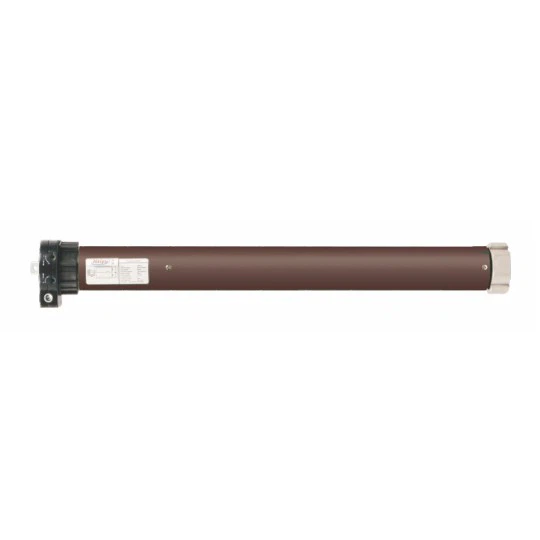
Benefits of Using a Compatible Power Supply Frequency
Using a power supply frequency that is compatible with the 35mm Standard Tubular Motor offers several benefits.
Optimal Performance
When the motor operates at its designed frequency, it can achieve optimal performance in terms of speed and torque. This means that the motor can lift and move the load efficiently, without overheating or experiencing excessive wear and tear.
Energy Efficiency
A motor running on a compatible power supply frequency consumes less energy compared to one operating outside its recommended frequency range. This not only reduces electricity costs but also contributes to environmental sustainability.
Longevity
Operating the motor at the correct frequency helps to extend its lifespan. By avoiding unnecessary stress on the motor's components, the risk of breakdowns and malfunctions is minimized, resulting in a longer service life.
Other Tubular Motor Options
In addition to the 35mm Standard Tubular Motor, we also offer other types of tubular motors, such as the 59mm Chain Tubular Motor and the 59mm Manual Tubular Motor. These motors are designed to meet different customer needs and applications. The 59mm Chain Tubular Motor is suitable for heavier loads and more demanding applications, while the 59mm Manual Tubular Motor provides a cost - effective solution for those who prefer manual operation.
Contact Us for Procurement
If you're interested in purchasing a 35mm Standard Tubular Motor or any of our other tubular motor products, we invite you to reach out to us for a detailed discussion. Our team of experts is ready to assist you in selecting the right motor for your specific requirements. Whether you need a motor for a residential or commercial application, we can provide you with high - quality products and professional advice. Visit our product page for the 35mm Standard Tubular Motor to learn more about its features and specifications.
References
- Electrical Engineering Handbook, Third Edition, edited by Richard C. Dorf
- Motor and Drive Systems: Design, Modeling, and Control by Iqbal Husain


