

Hey there! As a supplier of Door Access Control systems, I've had my fair share of conversations about the ins and outs of these systems. One question that pops up quite often is, "What is the function of a controller in a door access control system?" Well, let's dive right in and break it down.
First off, let's understand what a door access control system is. In simple terms, it's a system that manages who can enter or exit a particular area. It's like having a digital bouncer at your door, deciding who gets in and who doesn't. And at the heart of this system is the controller.
The controller is the brain of the door access control system. It's responsible for making all the important decisions about access. Think of it as a little computer that processes information and gives the go-ahead or the stop signal.
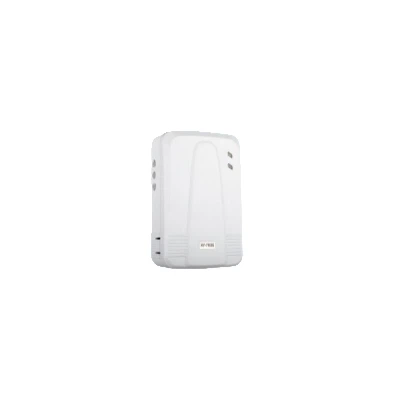

One of the primary functions of the controller is to verify credentials. When someone tries to gain access to a door, they usually present some form of identification, like a key card, a fingerprint, or a PIN code. The controller takes this information and checks it against a database of authorized users. If the credentials match, the controller sends a signal to the door lock to unlock, allowing the person to enter. If not, the door remains locked, and the person is denied access.
Let's say you have a company building, and you want to restrict access to certain areas to only authorized employees. You can program the controller to recognize the key cards of these employees. When an employee swipes their card at the door, the controller quickly checks the card's information. If it's on the list of authorized cards, the door unlocks, and the employee can go about their business. But if an unauthorized person tries to swipe a card, the controller will detect it and keep the door locked.
Another important function of the controller is to manage access levels. Not all areas in a building need the same level of security. For example, the lobby might be open to the public, while the server room should only be accessible to IT staff. The controller allows you to set different access levels for different areas. You can assign specific credentials to different groups of people, giving them access only to the areas they're supposed to enter.
This means you can have a more flexible and secure access control system. You can easily adjust the access levels as needed, for example, if an employee changes departments or leaves the company. You can remove their access to certain areas or revoke their access completely.
The controller also keeps track of access events. Every time someone tries to access a door, the controller records the time, the location, and the credentials used. This access log is a valuable tool for security and auditing purposes. You can review the log to see who entered or exited a particular area at a specific time. If there's an incident, like a security breach or a missing item, you can use the access log to investigate and find out what happened.
For instance, if there's a problem in the finance department, you can check the access log to see who was in the area around the time the incident occurred. This can help you narrow down the list of suspects and figure out what went wrong.
In addition to these functions, the controller can also integrate with other security systems. It can be connected to a surveillance camera system, for example. When an access event occurs, the controller can trigger the camera to start recording, providing you with a visual record of who entered or exited the door. This adds an extra layer of security and can be very useful in case of an incident.
It can also be integrated with an alarm system. If there's an unauthorized access attempt, like someone trying to force open a door, the controller can send a signal to the alarm system to sound an alarm, alerting security personnel.
Now, let's talk about the different types of controllers available. There are standalone controllers and networked controllers. Standalone controllers are self-contained units that operate independently. They're suitable for small-scale applications, like a single door or a small building. They're easy to install and manage, and they don't require a complex network infrastructure.
On the other hand, networked controllers are connected to a network, usually a local area network (LAN) or the internet. They offer more advanced features and greater flexibility. You can manage multiple controllers from a central location, making it easier to control access across a large building or multiple buildings. You can also remotely monitor and manage the access control system, which is very convenient, especially if you have a large property or multiple locations.
As a Door Access Control supplier, we offer a wide range of controllers to meet different needs. Whether you're a small business looking for a simple standalone controller or a large corporation in need of a networked controller for a complex access control system, we've got you covered.
If you're in the market for a door access control system, you might also be interested in our other products. We offer a Switch For Tubular Motor, which is a great addition to your access control setup. It allows you to control the movement of tubular motors, which are commonly used in garage doors and rolling shutters.
Our Door Access Control systems are designed to be reliable, secure, and easy to use. We use the latest technology to ensure that your access control system works smoothly and effectively.
And if you have rolling doors in your building, our Remote Control for Rolling Door is a must-have. It gives you convenient control over your rolling doors, allowing you to open and close them with just a click of a button.
In conclusion, the controller is a crucial component of a door access control system. It plays a vital role in verifying credentials, managing access levels, keeping access logs, and integrating with other security systems. With the right controller, you can have a more secure and efficient access control system for your property.
If you're interested in learning more about our door access control systems or have any questions, feel free to reach out to us. We're here to help you find the best solution for your access control needs. Whether you're a small business owner or a large corporation, we can provide you with the products and support you need to keep your property secure.
References
- Security Industry Association. (2023). Access Control Systems: A Comprehensive Guide.
- ASIS International. (2023). Best Practices for Door Access Control.


