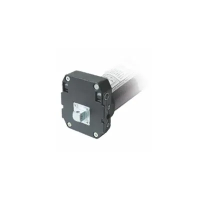
In the realm of modern security systems, door access control readers have emerged as a cornerstone technology, playing a pivotal role in safeguarding our homes, workplaces, and public spaces. As a leading Door Access Control supplier, I've witnessed firsthand the transformative power of these devices in enhancing security and streamlining access management. In this blog, I'll delve into the multifaceted role of a door access control reader and explore how it can benefit various sectors.
Enhancing Physical Security
The primary function of a door access control reader is to restrict unauthorized entry, thereby bolstering physical security. Traditional locks and keys have their limitations; keys can be lost, stolen, or duplicated, posing a significant security risk. In contrast, access control readers offer a more secure alternative by using advanced authentication methods such as proximity cards, key fobs, biometrics (fingerprint, facial recognition), or PIN codes.
When an authorized user presents their access credential, the reader verifies the information against a pre - registered database. Only if the credentials are valid will the door unlock. This not only prevents unauthorized individuals from entering restricted areas but also provides an audit trail of who accessed the door and when. For businesses, this is crucial for protecting sensitive information, equipment, and inventory.
In high - security environments such as government facilities, data centers, and research laboratories, access control readers with biometric authentication are often used. Biometric data is unique to each individual, making it extremely difficult to forge. For example, fingerprint scanners analyze the unique patterns on a person's fingertip, ensuring that only authorized personnel can gain access.
Streamlining Access Management
Door access control readers simplify access management for organizations of all sizes. Instead of dealing with the hassle of issuing and replacing physical keys, administrators can manage access rights digitally. They can easily add or remove user credentials from the system, change access levels, and set up time - based restrictions.
For instance, a company can grant different levels of access to employees based on their job roles. Managers may have access to all areas of the office, while regular employees are restricted to certain departments. Additionally, access can be limited to specific hours of the day, such as during business hours or in an emergency situation. This flexibility allows organizations to adapt their security measures to changing needs quickly.
Moreover, access control systems can integrate with other security technologies such as CCTV cameras and alarm systems. When an unauthorized access attempt is detected, the system can trigger an alarm and send a notification to security personnel. At the same time, the CCTV cameras can capture the incident, providing valuable evidence for further investigation.
Improving User Convenience
While security is a top priority, user convenience is also an important consideration. Door access control readers offer a more convenient way for users to enter a building or a restricted area. With proximity cards or key fobs, users can simply wave their credential in front of the reader, and the door will unlock automatically. This eliminates the need to fumble for keys, especially in situations where the user's hands are full.
Biometric access control readers also provide a high level of convenience. For example, facial recognition technology allows users to gain access by simply looking at the reader. This is not only fast but also hygienic, as there is no need to touch any surfaces. In public places such as airports, hospitals, and shopping malls, this type of access control can significantly improve the flow of people and enhance the overall user experience.
Applications in Different Sectors
Commercial Buildings
In commercial buildings, door access control readers are essential for protecting employees, customers, and valuable assets. They can be installed at the main entrance, individual offices, and restricted areas such as server rooms and storage facilities. By controlling access to these areas, businesses can prevent theft, vandalism, and unauthorized data access.
Educational Institutions
Schools and universities use access control readers to ensure the safety of students and staff. They can be installed at entrances, classrooms, laboratories, and dormitories. By restricting access to certain areas, educational institutions can prevent outsiders from entering the campus and protect students from potential threats.
Healthcare Facilities
In healthcare facilities, access control readers are used to protect patient privacy and ensure the security of medical records. They can be installed at patient rooms, pharmacies, operating theaters, and data centers. By controlling access to these areas, hospitals can prevent unauthorized access to sensitive information and protect patients from potential harm.
Related Products and Their Synergy
As a Door Access Control supplier, we also offer a range of related products that can work in synergy with our access control readers. For example, our Tubular Motor Switch can be used in conjunction with the access control system to automate the opening and closing of doors. This not only improves convenience but also enhances security by ensuring that doors are always properly closed.
Our Remote Control for Rolling Shutter is another useful product. It allows users to control the opening and closing of rolling shutters remotely, which can be integrated with the access control system. This is particularly useful in industrial settings, where large rolling shutters are used to secure warehouses and factories.


The Receiver for Tubular Motor is also an important component. It receives signals from the remote control and activates the tubular motor, enabling smooth operation of the door or rolling shutter. When integrated with the access control system, it provides an added layer of security and convenience.
Encouraging Contact for Business
If you're looking to enhance the security of your premises, streamline access management, or improve user convenience, our door access control readers and related products are the perfect solution. Our team of experts can provide you with customized solutions tailored to your specific needs. Whether you're a small business owner, a large corporation, or a public institution, we have the products and expertise to meet your requirements.
Don't hesitate to reach out to us to discuss your project. We're here to help you make the best decision for your security needs and guide you through the entire process, from product selection to installation and after - sales support.
References
- "Handbook of Access Control Systems and Technology" by Bill Scanlon
- "Physical Security Handbook" by Fred Whitacre
- "Security Systems and Networks: Design, Implementation, and Management" by Richard A. Deal