When it comes to the operation of a 45mm Manual Tubular Motor, one of the critical performance indicators that users and industry professionals often focus on is the vibration level. As a supplier of 45mm Manual Tubular Motors, I have in - depth knowledge and experience regarding this aspect, and I'm eager to share it with you.
Understanding Vibration in Tubular Motors
Vibration in a tubular motor is a complex phenomenon that can be influenced by multiple factors. In general, vibration is the mechanical oscillation about an equilibrium position. For a 45mm Manual Tubular Motor, vibration can occur due to the rotation of the motor's internal components, such as the rotor, gears, and bearings.
During operation, the rotor spins at a certain speed. Any imbalance in the rotor can cause centrifugal forces, which in turn lead to vibration. For example, if the mass distribution of the rotor is not uniform, the center of mass will deviate from the axis of rotation. As the rotor spins, this offset generates unbalanced forces that result in vibration.
Gears also play a significant role in the vibration of tubular motors. When gears mesh, there can be transmission errors, such as inaccurate tooth profiles or improper gear meshing clearances. These errors can cause impact forces and vibrations during the power - transmission process. Moreover, the wear and tear of gears over time can exacerbate the vibration problem.
Bearings are another key component that can affect vibration. Faulty bearings, such as those with damaged races or rolling elements, can generate high - frequency vibrations. The lubrication condition of bearings is also crucial. Insufficient or improper lubrication can increase friction and lead to abnormal vibrations.
Measuring the Vibration Level of a 45mm Manual Tubular Motor
To accurately measure the vibration level of a 45mm Manual Tubular Motor, specialized equipment is required. One of the most commonly used tools is a vibration sensor, also known as an accelerometer. An accelerometer can measure the acceleration of the motor's vibration, which is then converted into displacement or velocity values.
The measurement process usually involves mounting the accelerometer on the motor housing at specific locations. These locations are carefully selected to capture the most representative vibration signals. For a 45mm Manual Tubular Motor, typical measurement points include the end - covers and the sides of the motor housing near the rotor and gearbox.
Once the accelerometer is installed, the motor is run under normal operating conditions. The vibration data is then collected and analyzed using software. The analysis typically includes calculating the root - mean - square (RMS) value of the vibration signal, which provides a measure of the overall vibration level. Frequency analysis is also performed to identify the dominant vibration frequencies. This can help in pinpointing the source of the vibration. For example, a high - frequency vibration may indicate a problem with the bearings, while a low - frequency vibration could be related to rotor imbalance.
Acceptable Vibration Levels for a 45mm Manual Tubular Motor
There are industry standards and guidelines that define the acceptable vibration levels for tubular motors. These standards take into account factors such as the motor's power rating, speed, and application. For a 45mm Manual Tubular Motor, the acceptable vibration level in terms of RMS acceleration is generally in the range of 0.5 - 2.5 m/s².
If the vibration level exceeds the acceptable range, it can have several negative impacts. Firstly, excessive vibration can cause premature wear of the motor's components. For instance, high - level vibrations can accelerate the wear of gears and bearings, reducing their service life. Secondly, vibration can generate noise, which is not only annoying but can also be a sign of potential mechanical problems. In some applications, such as in quiet indoor environments, excessive noise from a vibrating motor can be a major drawback.
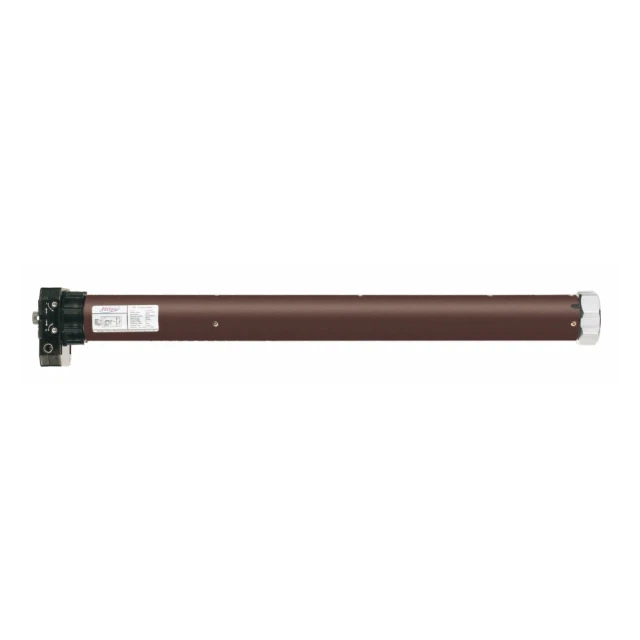

Our 45mm Manual Tubular Motor's Vibration Performance
As a supplier of 45mm Manual Tubular Motors, we take great pride in the vibration performance of our products. Our motors are designed and manufactured with high - precision components to minimize vibration. We use advanced manufacturing techniques to ensure the accuracy of the rotor's mass distribution, reducing the possibility of imbalance.
In the production process, we conduct strict quality control on gears and bearings. We carefully select high - quality materials and use precision machining to ensure proper gear meshing and bearing performance. Before the motors leave the factory, they undergo comprehensive vibration testing. We adjust and optimize the motors based on the test results to ensure that the vibration levels meet or even exceed industry standards.
Comparison with Other Tubular Motors
In addition to our 45mm Manual Tubular Motor, we also offer a range of other tubular motors, such as the 59mm Fast Speed Tubular Motor, 35mm Standard Tubular Motor, and 59mm Standard Tubular Motor. Each type of motor has its own characteristics in terms of vibration.
The 59mm Fast Speed Tubular Motor, due to its higher speed, may have a relatively higher vibration level compared to the 45mm Manual Tubular Motor. However, through advanced design and manufacturing techniques, we have managed to keep the vibration within an acceptable range. The 35mm Standard Tubular Motor, on the other hand, is generally more compact and may have a lower vibration level because of its smaller size and lower power requirements.
The Importance of Low - Vibration Tubular Motors
Low - vibration tubular motors offer several advantages. In applications where precision is required, such as in automated blinds or curtains, low vibration ensures smooth and stable operation. It reduces the risk of misalignment and improves the overall performance of the system.
In addition, low - vibration motors are more energy - efficient. Excessive vibration means that part of the energy is wasted in generating the unwanted mechanical oscillations. By reducing vibration, more of the electrical energy is converted into useful mechanical work, resulting in lower power consumption.
Contact Us for Purchase and Consultation
If you are in the market for a 45mm Manual Tubular Motor or any of our other tubular motors, we are here to assist you. Our team of experts can provide you with detailed information about the vibration performance and other technical specifications of our products. Whether you need a motor for a small - scale residential application or a large - scale commercial project, we have the right solution for you.
We understand that every customer's needs are unique. That's why we offer customized solutions tailored to your specific requirements. Contact us to start a discussion about your project, and let's work together to find the best tubular motor for you.
References
- ISO 10816 - 3: Mechanical vibration – Evaluation of machine vibration by measurements on non - rotating parts – Part 3: Industrial machines with nominal power above 15 kW and nominal speeds between 120 r/min and 15 000 r/min when measured in situ.
- Motor Vibration Analysis Handbook, published by an industry - leading motor technology research institute.